Bottle Jump 3D
- 4.4
- Rating
- 100.00M
- Installs
- Free
- Price

 Analysis by App-foxy
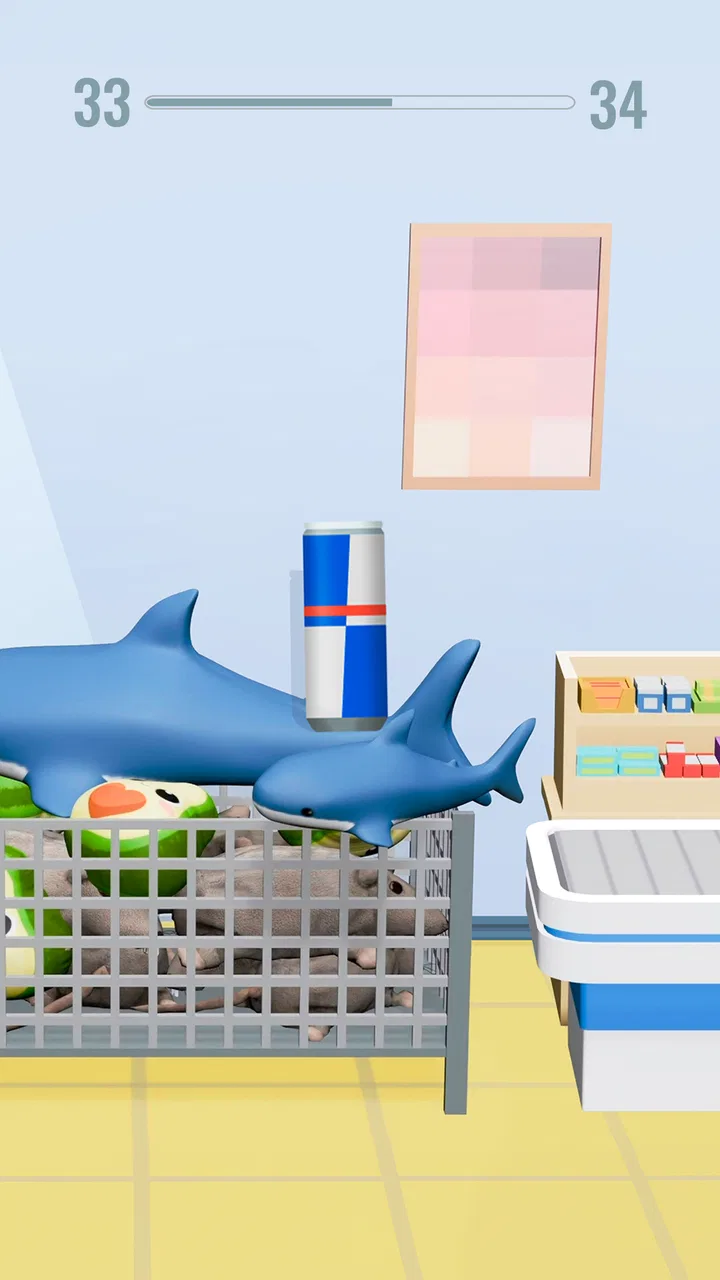
I picked up Bottle Jump 3D expecting a tiny time-killer, and that is exactly where it makes the best first impression. The idea is immediately readable: tap to flip a bottle, land it upright, and keep moving through a sequence of obstacles and surfaces. There is no long explanation to get through before the first attempt, which makes it a natural choice when I have only a spare minute.
What makes the game appealing is the small burst of satisfaction when a flip lands perfectly. The action is simple, but the timing gives each attempt a little tension. I am not managing a complicated character, learning a large map, or remembering a collection of controls. I am watching the bottle, judging the distance, tapping at the right moment, and accepting the result. That direct loop suits the arcade category very well.
Developed by CASUAL AZUR GAMES, the game is free to start and is rated for Everyone. Its broad appeal is easy to understand: a child can grasp the objective quickly, while an adult can use it as a brief distraction during a wait. It has also reached over 100 million installs, which fits the way it plays—accessible, quick to understand, and designed around repeated attempts rather than a long commitment.
You May Also Like

 Blood Strike: 2.5 Anniversary
Blood Strike’s Loadouts Turn Every Drop Into a Tactical Gamble
A close look at Blood Strike’s custom loadouts: how fast access to signature weapons reshapes its battle royale rhythm, rewards preparation, and narrows the gap between fights.

 Pandora - Music & Podcasts
Pandora’s Music Is Easy to Start, but Harder to Recover
Pandora’s strength is its low-effort path from a seed to a station. Its weak spot is how much confidence it asks you to place in connection, setup, and quiet recovery.

 8 Ball Pool
 Is Built on Rivalries, Rematches, and Routine
A close look at the rivalries, rematches, shared routines, and unanswered safety questions that turn a quick pool match into a persistent mobile community.

 Samsung Music
’s Quiet Strength Is Playing What You Already Own
Its reach comes less from spectacle than from dependable access to a personal library. That simplicity is both the app’s strongest retention engine and its ceiling.

 AccuWeather: Weather Radar
AccuWeather Review: A Quick, Clear Forecast for Everyday Decisions
For everyday plans, the best forecast is the one you can understand quickly. AccuWeather makes rain timing, radar, and local conditions easy to act on, with a few trade-offs.

 Hill Climb Racing
Why Hill Climb Racing Still Turns Crashes Into One More Run
A tiny car, a bumpy hill and one more upgrade: Hill Climb Racing keeps resurfacing because its simple chaos makes every near-miss feel personal.
More From Our News Desk



Why the first few minutes work so well
The strongest part of the experience is the opening rhythm. I do not need to study a tutorial or build a strategy before playing. The bottle’s movement communicates almost everything I need to know. A successful landing encourages me to try the next jump, while a mistake is easy to understand because the timing was mine to control.
This clarity matters more than it may sound. Many arcade games try to create excitement with crowded screens, several currencies, or a long chain of unlocks. Here, the central action stays visible. The challenge comes from judging the flip, not from decoding a complicated interface. When I want something that starts instantly, that simplicity is a real advantage.
The controls are also well suited to one-handed play. I can hold the phone in one hand and use a thumb for the tap, which makes the game comfortable on a bus, in a queue, or while taking a short break at home. I would still recommend keeping the sound low or off in shared spaces, because a game built around quick attempts is easy to open casually without wanting to disturb anyone nearby.
One useful habit is to watch the bottle’s arc instead of tapping based only on the next platform. The visual distance can be deceptive, especially when the landing area looks close but the bottle needs a fuller rotation. After a few attempts, I found myself paying more attention to the height and timing of the jump than to the bottle itself. That small change in focus makes the controls feel less random and gives failures a clearer lesson.
A good fit for broken-up free time
The game works particularly well when my attention is divided. If I have a short gap before an appointment, I can play a few attempts without needing to remember a story, a mission, or a complicated objective. If I stop, I do not feel as though I have abandoned a major task. That low mental commitment is one of its best qualities.
A realistic example is a ten-minute wait at a café. I can open the game, make several flips, and close it when my order is ready. The session does not ask me to plan ahead. I can enjoy a clean landing, fail on the next one, and put the phone away without losing the main point of the experience. For this kind of use, the game is more convenient than a deeper arcade title that needs longer concentration.
It is also a reasonable choice for younger players because the basic objective is so easy to explain. The Everyone rating reflects that broad accessibility. Still, “easy to understand” does not mean every player will find it equally enjoyable. Someone looking for exploration, character development, or a large set of mechanics will probably find the bottle-flipping loop too narrow.
How the session rhythm feels
My favorite quality is the short cycle between action and result. A tap leads quickly to a landing or a fall, so there is little dead time. That keeps the game moving and makes it easy to say, “I will try once more.” The next attempt begins with almost no emotional or practical barrier.
That structure is especially effective for players who enjoy improving through repetition. I can identify a bad tap, adjust the next one, and immediately test whether the change helped. The feedback is not buried under menus or lengthy transitions. Even when I fail, I usually understand what I should try differently.
The trade-off is that the same speed can make the experience feel thin during a long sitting. I would not choose it as my only game for an entire evening. Its best length is measured in small bursts, where the simplicity feels refreshing rather than limited. The more time I spend continuously flipping, the more noticeable the narrow core loop becomes.
For better results, I avoid playing while walking or doing something that shakes the phone. The control may be simple, but the timing still benefits from a steady view. I also find that lowering distractions helps: a quick session is more enjoyable when I give the bottle a little attention instead of tapping absent-mindedly while switching between other tasks.
Returning after an interruption
This is where the game’s uncomplicated design helps. If I close it because a message arrives or someone needs my attention, I do not have to reconstruct a complicated situation when I come back. The basic goal remains obvious, and I can resume the same kind of play immediately.
That makes it more interruption-friendly than many arcade games built around long runs or elaborate temporary challenges. I do not feel punished for treating it as a background activity. A short interruption can break my concentration, but it does not create a large memory problem. I simply look at the next situation and begin another attempt.
There is an important distinction, though. Easy return does not automatically mean perfect pause behavior in every situation. If I am in the middle of a flip, the attempt may not be meaningful once my attention has gone elsewhere. I prefer to treat each launch as disposable rather than expecting the game to preserve every moment exactly. That mindset matches its quick, retry-based structure.
For commuters and people with unpredictable schedules, this matters. A game that demands a protected twenty-minute block can become inconvenient even if it is excellent. Bottle Jump 3D is better suited to the opposite pattern: open it when available, play while focused, and leave without feeling that I have disrupted a larger plan.
Where replay value comes from
The replay value is mainly personal rather than narrative. I return because I want to land the next flip, recover from a mistake, or see how consistently I can handle the timing. There is no need to wait for a story reveal to make another attempt worthwhile. The immediate challenge has to carry the experience.
That works for me in short sessions because the satisfaction is concentrated. A successful landing feels like a small, clean win. The problem is that the same source of enjoyment can become repetitive if I am not in the mood for precision. Players who need frequent changes in scenery, mechanics, or objectives may run out of interest sooner than players who enjoy polishing a simple skill.
I would describe the repetition as honest rather than deceptive. The game does not need to pretend that bottle flipping is a deep simulation. It offers a focused arcade activity and asks whether the timing itself is enough to keep me playing. For me, it is enough for brief breaks, but not always enough for a long uninterrupted session.
One practical way to keep the loop fresh is to set a small personal target before starting. I might aim to complete a few successful landings without rushing, or I might focus on making calmer taps instead of chasing speed. These goals do not change the game’s systems, but they change how I pay attention to the same action. That is useful when I want a little more purpose from a simple time-killer.
Free access and the purchase question
The game is free, which makes it easy to try without committing money first. It includes in-app purchases ranging from $0.99 to $35.99 per item. I would approach those purchases carefully because the core appeal is already available in the basic play loop: tap, judge the movement, land, and try again.
For a casual player, I would not treat spending as necessary to understand whether the game is enjoyable. The sensible approach is to play enough free sessions to decide whether the repetition suits you. If the central action already feels satisfying, the game has done its job before any optional purchase enters the picture. If the action feels too narrow, paying is unlikely to solve that underlying issue.
This is also worth considering for families. Because the game is accessible to younger players, adults may want to review purchase controls on the device before handing it over. The presence of a free download can make a game feel completely risk-free, but optional item prices still deserve attention, especially when a child can restart attempts quickly and repeatedly.
Performance expectations and device fit
The listed minimum requirement is Android 8.0, so the game is aimed at a wide range of relatively modern Android phones and tablets. I would still judge the experience by the actual device rather than the operating system alone. Timing-based play feels best when the screen responds consistently, because even a small feeling of delay can make a missed landing seem unfair.
On a suitable device, the uncluttered concept should be less demanding than a large 3D adventure or a graphics-heavy action game. That is another reason it works as a casual arcade option. It does not ask me to learn a large control scheme or reserve a long session for loading into a complex world.
However, the game’s simplicity makes any interruption more noticeable. In a visually dense title, a brief pause may disappear among many effects. Here, the bottle’s movement is the whole point, so I notice more quickly when the phone is busy, my attention is split, or the display is difficult to see. Playing in a stable environment improves the experience more than trying to force a session into every possible moment.
How it compares with other arcade choices
Compared with endless runners, this game feels more deliberate and less dependent on steering through a constantly moving stream of hazards. I am not mainly reacting to a character’s position; I am committing to a flip and watching its result. That makes it a better choice when I want one clear action rather than a broader reflex challenge.
Compared with puzzle arcade games, it offers less planning. I do not build a solution several moves ahead. The decision is immediate, and the feedback arrives quickly. Players who enjoy arranging pieces, managing limited resources, or solving patterns may prefer a puzzle title because it offers more mental variety.
Compared with larger platform games, Bottle Jump 3D is much easier to enter and leave. There is no comparable sense of exploration, but there is also less friction. I can play without remembering where I was or what I was supposed to accomplish. That makes it the better option for a short break, while a platformer is usually the stronger choice when I want discovery and sustained progression.
In other words, the game’s advantage is not depth. Its advantage is immediacy. It gives me a focused action with a quick result, and that is exactly why it can work so well in small gaps during the day.
Who should play it—and who should skip it
I recommend it to anyone who likes compact arcade challenges, one-handed controls, and repeated attempts that do not require a long memory. It is particularly suitable for players who enjoy improving timing gradually and for people who want something they can open without preparing for a serious gaming session.
It is also a good match for families looking for an easily understood game, provided adults remain aware of the available in-app purchases. The Everyone rating makes the basic concept broadly approachable, and the controls are simple enough to demonstrate in seconds.
I would skip it if I need a strong story, character progression, multiplayer competition, or a wide range of activities. I would also choose another game if repetition quickly frustrates me. The bottle-flipping idea is focused, and its strength can become its weakness: there are not many layers to distract from the timing loop.
Players who dislike losing because of small timing errors may want a more forgiving arcade experience. This game asks for attention even though it is casual. It is easy to begin, but that does not mean every landing will be easy. The right audience is not someone searching for effortless background entertainment; it is someone who enjoys a small challenge that can be repeated without much ceremony.
My final take on the short-session experience
After spending time with it, I see Bottle Jump 3D as a focused break game rather than a full-time destination. Its best qualities are immediate understanding, quick feedback, and a session structure that survives interruptions well. I can open it during a spare moment, make a few attempts, and close it without carrying unfinished business into the rest of my day.
The limitations are equally clear. The central action can become repetitive, and players seeking deeper systems will find little reason to stay for long stretches. The free-to-play format also means I would keep an eye on optional purchases, especially on a shared family device. Those points do not ruin the experience, but they define how I would use it.
The current version is 1.25.0, and the game has earned a 4.4 average from around 385 thousand ratings, alongside roughly 7.4 thousand written reviews. Those figures suggest that its straightforward formula has connected with a large audience, but my recommendation is still based on fit rather than popularity.
My verdict is simple: choose it when you want instant arcade pleasure in short, interruptible sessions. If that sounds like your kind of break, the game is easy to recommend as a free download. If you want variety, story, or a deeper sense of progress, your time is probably better spent with another arcade game built around more than one repeated action.
FAQs for Bottle Jump 3D
01What is the main objective of Bottle Jump 3D?
The main objective of Bottle Jump 3D is to successfully flip a bottle through various obstacles and platforms. Players must tap the screen to propel the bottle, aiming to land it upright on different surfaces. Each level presents unique challenges, requiring timing and precision to progress.
02Is Bottle Jump 3D free to play?
Yes, Bottle Jump 3D is free to download and play. However, it does include optional in-app purchases and advertisements. These purchases can help enhance gameplay or remove ads, but they are not necessary to enjoy the full experience of the game.
03What are the device requirements for Bottle Jump 3D?
Bottle Jump 3D is compatible with most modern Android and iOS devices. It requires Android version 5.0 or later and iOS version 10.0 or later. Ensure you have enough storage space and a stable internet connection for optimal performance and updates.
04Can Bottle Jump 3D be played offline?
Yes, Bottle Jump 3D can be played offline, allowing you to enjoy the game without an internet connection. However, certain features, like in-app purchases and some advertisements, require a connection to function properly.
05Does Bottle Jump 3D have multiplayer or social features?
Currently, Bottle Jump 3D does not have multiplayer or direct social interaction features. Players can share their high scores or achievements on social media platforms, but the game itself is primarily a single-player experience focused on personal skill and progression.
Pros
- Engaging and addictive gameplay.
- Simple controls
- easy to learn.
- Visually appealing graphics.
- Frequent updates with new levels.
- No internet connection needed.
Cons
- Contains in-app purchases.
- Ads can be intrusive at times.
- Limited customization options.
- Repetitive sound effects.
- Some levels feel too similar.

Bottle Jump 3D
Gallery